Trauma is…


Trauma is not measured by the event alone. It is measured by the nervous system’s response to the event.
One of the most important things we can understand about psychological trauma is that two people can experience the exact same event and leave with very different outcomes.
Why?
Because every nervous system is unique.
Our genetics, childhood experiences, attachment relationships, previous exposures to adversity, available social support, resilience, and countless other factors influence how our brain and body respond to overwhelming experiences.
That means each person’s threshold for becoming overwhelmed is different.
Psychological trauma occurs when an experience overwhelms an individual’s nervous system response.
Trauma can result from a single catastrophic event, such as war, assault, a serious accident, or the sudden or devastating death of a loved one.
It can also develop over time through repeated emotional abuse, neglect, chronic stress, financial insecurity, unstable relationships, bullying, discrimination, prolonged illness, or the cumulative burden of repeated losses.
As a grief counselor, one misconception I encounter regularly is the belief that grief and trauma are always separate experiences.
While many losses lead to adaptive grieving, some losses overwhelm the nervous system, creating both grief and trauma. This is especially true following sudden, violent, unexpected, or particularly distressing deaths.
What makes an experience traumatic is not simply what happened—it is how the nervous system processes and stores the experience.
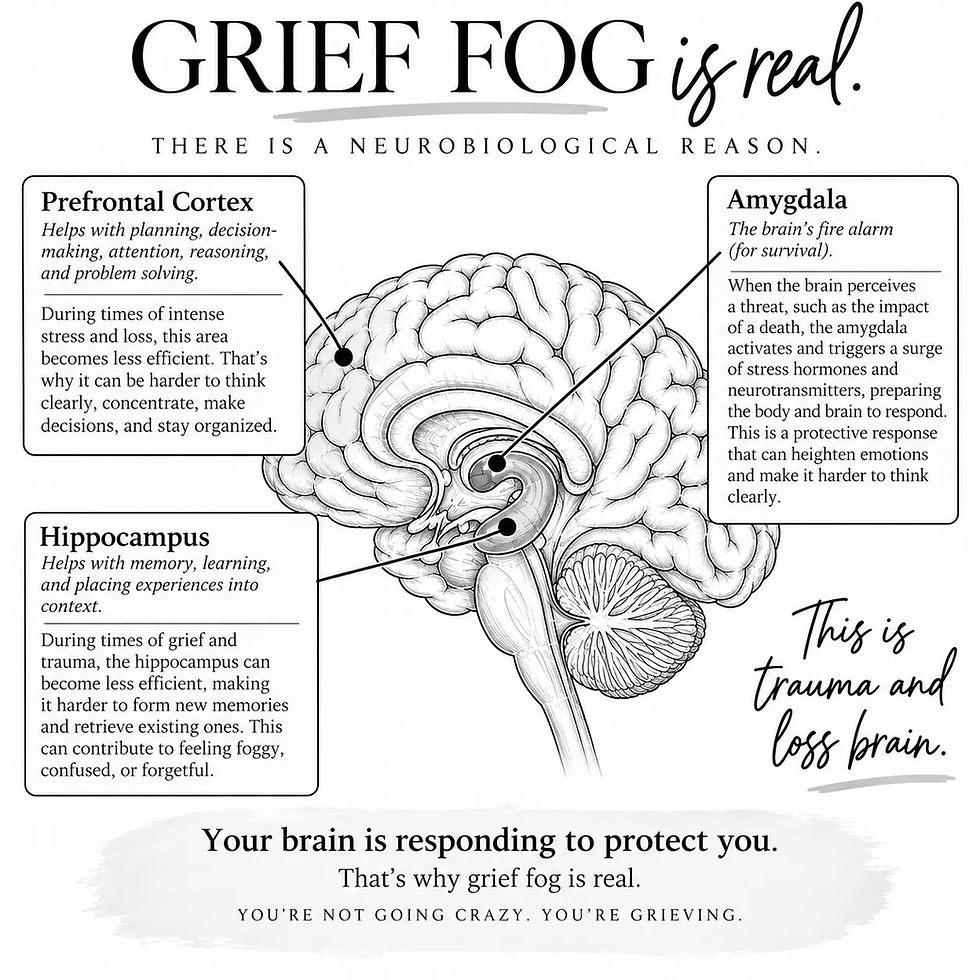
Even after the danger has passed—or after the person we love is gone—the nervous system may continue to respond as though the threat or loss is still unfolding.
This persistent state of survival can affect emotions, relationships, concentration, sleep, physical health, and overall well-being.
This is why comparing trauma is never helpful. Every traumatic experience is as individual as your nervous system.
Trauma cannot be compared nor is it to be minimized . It is an individual neurobiological response to overwhelming stress.
When we understand that, we move away from judgment and toward compassion—for our clients, our loved ones, and ourselves.


Comments